Site Network: Home | Laptop | Mobile Phone | About

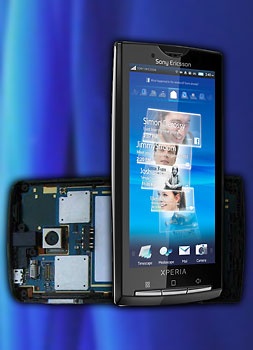
The Sony Ericsson XPERIA X10 is making a second round through the FCC testing grounds. The first time it was tested, the frequencies listed in the report indicated that it was the T-Mobile version. The new report however is about the XPERIA X10a version.

The listed 3G frequencies are 850/1900MHz, so hello AT&T and the rest that share those bands - Bell, Rogers, Telus. It's no guarantee that any of these operators will get theSony Ericsson XPERIA X10a, but their chances just raised drastically. It's still not too late for a "Dear Santa" letter.

So, there are two versions of the Sony Ericsson XPERIA X10 that have passed through the FCC now, the first oneseemingly designed for T-Mobile. Yet there's still no info on when either of them will actually start selling.

To help pass the time, here are some shots of the X10 iFixit style (PDF link). You can also keep an eye on theSonyStyle USA website. They have the Sony Ericsson XPERIA X1 on sale and maybe they'll get the XPERIA X10 too, if your operator of choice doesn't. Just don't expect to get it in time for this Christmas.


[www.gsmarena.com]

Synaptics have ganged up with a few other companies to create the Synaptics Fuse concept full -touch phone. The concept tries to take phone interfaces to the next level by combining a touchscreen with other technologies to improve one hand usability and reduce the need to look at the screen.

The multi-touch screen is a given, but Synaptics have gone the extra mile and have covered the whole phone with a variety of sensors. Force and capacitive sensors on the sides of the Synaptics Fuse sense the users grip and control panning and scrolling.

The force sensors enable another gesture as well - squeezing the phone. The back of the phone is touch sensitive as well and can be used for 2D navigation. Yet another sense of the Synaptics Fuse is the proximity sensor.

Synaptics Fuse photo Synaptics Fuse photo Synaptics Fuse photo Synaptics Fuse UI Synaptics Fuse UI Synaptics Fuse UI
Synaptics Fuse concept phone • the 3D UI developed by The Astonishing Tribe

But input is just half of the interaction expression. The Synaptics Fuse concept phone uses 3D graphics and "next generation" haptics to interact with the user's senses. The press release stays mum on the matter what exactly "next-generation" implies.

Still, from what we could tell from the videos below, the Synaptics Fuse uses a WVGA AMOLED screen and is powered by a Cortex A8 based processor with PowerVR SGX graphics chip.

Here goes a demo video, which demonstrates how the gestures work:

And another one, which shows off the interface. You can see the phone is social network-friendly with Facebook, Twitter, YouTube, Blogger and Skype integration.

The first video begs the question - how is the touchpad on the back "yet another mode of effective and fun single-handed control". Sure, it doesn't obstruct the display, but unless we counted wrong, the guy in the demo video used two hands. We'd need to hold the phone ourselves to judge if it's comfortable (or at all possible) to do this accurately with one hand.

The Synaptics Fuse will be demonstrated at CES in Las Vegas and the MWC in Barcelona next year.

[www.gsmarena.com]

You hear a lot about camera modules on mobile phones, but not so much about the chip that does all the work of compressing the images and video. The new Broadcom BCM2763 VideoCore IV can handle photos up to 20 megapixels and record Full HD video among other things.

Of course, it would need a 20-megapixel sensor to do its 20-megapixel photo trick but the first devices using the Broadcom VideoCore IV are expected to come out in 2011. In two years, it's not unlikely some company will be pushing out its new 18MP or so camera phone. Because, you know, they already did 12MP and to the average consumer more is better.

The chip can also handle image stabilization, face and smile detection and take several images a second - we wouldn't expect anything less out of future high-end camera phones.

Even if 20MP image sensors that fit into mobile phones don't materialize, the Broadcom VideoCore IV can record 1080p video using H.264 High Profile (the codec used in Blu-ray discs).

Image capture is just part of the BCM2763 VideoCore IV repertoire - it can also play back Full HD video as well and do it over HDMI. What's left is for the phone to use the Micro HDMI connectors, which are the size of microUSB, and you get a pocketable HTPC.

The last trick that the Broadcom VideoCore IV has up its sleeve is that it works as a GPU with 128MB LPDDR2 of dedicated RAM, for rendering 3D graphics.

Since it's targeted at mobile devices, the Broadcom BCM2763 VideoCore IV is built using a 40nm process. Broadcom estimates that its reduced power consumption will lead to 4-6 hours of video recording and 8-10 hours of video playback on most mobile devices, and up 16 hours if the video is played over HDMI. If the internal memory of the device can fit those 16 hours that is.

[www.gsmarena.com]

Tags: Samsung, Bada
Just as promised, today Samsung showed the
world their new smartphone operating system
called Bada. At an event, held in London, the
Korean company revealed the first details about
the upcoming platform and gave the start to the
developers challenge that should create a good
application base for the future Bada users.
The new Bada OS is all touch
The Bada OS is based around on Samsung
proprietary TouchWiz User Interface - in fact the
design mockups they've presented at the event
were pretty much similar to the Samsung
Pixon12 UI.
Designed for use on full-touch handsets only,
Bada OS should help create “a smartphone for
everyone” and increase the market share of the
smartphones up to 50 percent.
Being a fully-fledged smartphone platform
though, Bada will allow developers to tap into the
various mobile phone features and sensors -
Flash UI, web control, motion sensing, vibration
control, face detection, weather, proximity, and
other activity sensors. Obviously developers
should have no problems developing immersive
and interactive applications.
Samsung Bada OS presentation
Samsung have highlighted the various service-
centric features as the Bada OS differentiator.
Those would location-based social networking
services, device synchronization, content
management, location-based services, and e-
commerce services - all supported by back-end
Bada servers.
Samsung Bada OS presentation
As you'll see from the 4-minute presentation
video below, at this point Samsung are reaching
mainly towards developers, not cellphone users.
Samsung are hoping that getting the developers
support will get a head start for their new OS.
They've setup a dedicated Bada developers
website and have already put up the Bada SDK
for download.
And the Bada Challenge is up
Today also marks the start of "The Bada
Challenge", which is what Samsung will call their
developers' contest. It gives developers a chance
to win a part of a 2,700,000 US dollars prize fund
by submitting an app for the new OS.
In an attempt to create a large applications
database for the new Bada platform, Samsung
will also have a series of Developer Days that will
take place across the world during 2010. Open to
all developers, the initial events will be held in
Seoul, London and San Francisco, with more
events following as the year progresses.
Further on, Samsung have secured the
partnership of key players in the mobile software
industry. EA Mobile, Capcom, Gameloft, Konami
were some of the bigger names mentioned at the
event. Some of them even had high-standing
representatives attending the London event to
attest their support to the Bada cause.
Samsung have secured the partnership of
some serious companies
Samsung will have a Bada application store,
which would allow even non-registered users to
buy applications and app payments with the
mobile phone bill. With the launch of the first
Bada phone, the Samsung application store will
be expanded to cover up to 50 countries. The
second half of 2010 shouild see the store expand
worldwide.
We were able to shoot a demo video of some of
the applications and games Samsung Bada OS
partners are developing for the new OS.
And the first Bada smartphone to come is...
The company seems pretty determined to make
this new platform work. We are yet to see its
implementation. Samsung are promising their
first and only handset (for now) to come in the
first half of 2010.
With the first Bada handset, Samsung will be
focusing the high performance segment and
large sale numbers to widen the user base as
quickly as possible. It's similar to what Nokia did
with their Nokia 5800 XpressMusic.
It will be their next Bada smartphones to cater for
the lower segments of the market and reaching
even further as one of the Bada slogans suggests:
"Smartphones for everyone".
And a few words for closing
Somehow we couldn't help but notice that
Samsung have been diligently taking presentation
cues from Apple. Even the slides were designed
matching some of those used by Apple when
they first announced iPhone OS 2.0 and 3.0 back
in the day. There's certainly nothing wrong about
that, Apple are among the best in business when
it comes to putting up a nice presentation.
We also really hope that Samsung will match
Apple's success in promoting the new OS and
developing its application and user base.

Opera introduces new, cross-platform UI framework.

Opera Mobile 10 now available to operators and OEMs on major mobile platforms including Android, BREW, Windows Mobile and Symbian/S60

Oslo, Norway — December 10, 2009

Opera Software today released Opera Mobile 10 to operators and OEMs. This direct-to-distributor version is available on Android, BREW, Windows Mobile and Symbian/S60 smartphones and includes Opera’s new, cross-platform UI framework. As a part of Opera’s shift to unify the look and feel of its mobile browsers, the cross-platform UI framework allows operators and OEMs to implement the same user experience quickly and cost-effectively across their entire range of handsets.

Opera Mobile 10

The building blocks of a great UI

Opera's cross-platform UI framework is built on top of the browser engine. This allows it to work seamlessly on all platforms running Opera Mobile or Opera Mini. This framework is tailored for efficient execution of dynamic user interfaces for Web browsers. Opera's cross-platform UI framework empowers operators and OEMs to deploy one browser UI to a wide range of devices, with minimal integration. The result is a unified, consistent Internet experience for the end users and time and cost savings for the operators or OEMs.

A unique and visually stunning experience

“Because no operator offers just one type of mobile phone, Opera has developed a new UI solution that can be deployed on multiple phones and platforms. Due to its pure versatility, the cross-platform UI framework can be customized by Opera to meet brand requirements,” said Jon von Tetzchner, CEO, Opera Software. “Our mobile UI has already been deployed on millions of handsets, and the rave reviews we’ve received tell us that Opera has succeeded in creating a unique and visually stunning Web experience that’s easy and compelling for users across the board.”

Opera Mobile 10 is the market-ready browser of choice for smartphones and advanced feature phones, with more than 135 million shipments globally. The browser comes packed with features to make mobile Web surfing easier, including tabs, Speed Dial and password manager. Today’s release for operators and OEMS on the major platforms opens up the Opera experience to more people, on more devices.

[www.opera.com]

What do phishing, instant messaging malware, DDoS attacks and 419 scams have in common? According to Cisco Systems, they're all has-been cybercrimes that were supplanted by slicker, more menacing forms of cybercrime over the past year.

In its 2009 Annual Security Report, due to be released Tuesday, Cisco says that the smart cyber-criminals are moving on.

"Social media and the data-theft Trojans are the things that are really in their ascent," said Patrick Peterson, a Cisco researcher. "You can see them replacing a lot of the old-school things."

Peterson is talking about attacks such as the Koobface worm, which spreads via Facebook and Twitter. Koobface asks victims to look at a fake YouTube video, which ultimately leads to a malicious download. Cisco estimates that Koobface has now infected more than 3 million computers, and security vendors such as Symantec expect social network attacks to be a major problem in 2010.

Another sneaky attack: the Zeus password-stealing Trojan. According to Cisco, Zeus variants infected almost four million computers in 2009. Eastern European gangs use Zeus to hack into bank accounts. They then use their networks of money mules to wire stolen funds out of the US. They have been linked to about $100 million in bank losses, some of which have been recovered, the US Federal Bureau of Investigation said last month.

With that kind of success, older types of attacks such as instant messaging worms and phishing are now on the decline, Peterson said.

Traditional phishing is becoming harder as consumers become wary of suspicious banking sites and the banks themselves are now adept at getting these sites taken off the Internet.

Those factors make password stealing Trojans like Zeus even more popular, Peterson said. "They're focusing on other ways to basically accomplish the same thing."

One scourge that's not slowing down, however, is spam. Cisco expects spam volume to rise between 30 and 40 percent next year, even though countries such as the US have knocked some spammers offline. In fact, US spam dropped 20 percent in 2009, and the US lost its traditional position as the world's number-one source of spam. More spam now comes from Brazil, Cisco says.

Sony Ericsson were finally able to fix the software issues that have been plaguing the Sony Ericsson Satio with the latest firmware update R1CA037. If you've been following the story, you'd now that recently Satio was pulled out of stores due to some undisclosed software problems.

Well our sources from Carphone Warehouse share with us that they've already re-stocked a new batch of Satios and those will be ready for selling as soon as tomorrow.

We contacted Sony Ericsson representatives about the new developments and their official statement was they are quite ready with the new software update for the Sony Ericsson Satio and that they will be announcing it publicly as soon as they manage to upload all the needed files and scripts online.

Obviously, there are quite some operator specific versions of the firmware, so it may take some time before all versions are up but you should check - you might as well be among the lucky early birds. On the other hand, if you don't own a Satio and you've been holding back from buying one only due to those issues, well, you should be happy to hear they've been taken care of.

Sony Ericsson Satio Update page

[www.gsmarena.com]